
San Potito Ultra: the cross of the martyr Potito
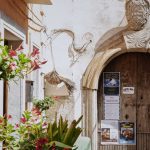
The nail, symbol of San Potito the martyr, becomes a biscuit to be given every January 14th to all the children of San Potito Ultra.


In the characteristic streets of Altavilla Irpina stands a religious group with unique features and a history steeped in devotion and tradition: the Battenti di San Pellegrino, also known as Fujenti (barefoot stampers). The battenti have their roots in the 18th century, when several religious brotherhoods, inspired by ardent Catholic devotion and the desire to manifest their faith in a tangible way, became renowned for their processions.
The Battenti di Altavilla, like other battenti companies in southern Italy, have intertwined their identity with the history of the place and the figure of the saint, in this case San Pellegrino Martire. Even today, this tradition is kept alive by adults and young people alike, enthusiastically preserving the traditions and participating fervently, ensuring that the bond with the Saint remains indelible.
Saint Peregrine Martyr is a venerated figure in Christian tradition. His story has its roots in the early eras of Christianity, when followers of this faith faced danger and persecution to spread the Gospel message.
The Saint’s life is shrouded in mystery and legend. Born into a Christian family, he was instructed in the faith from childhood by his parents and the priest Rufino. When Emperor Commodus attempted to establish himself as a deity, Saint Peregrine and his friends openly protested, attracting the emperor’s attention and having them arrested. Despite torture and pressure, his friends remained faithful to their faith. Thus, Commodus ordered them to be beaten to death. They were led to the so-called “wicked stone,” spiritually assisted by Rufinus, who approached them, embraced them, and prayed with them. The martyrs died in 192 AD, and their remains were initially transferred to the Catacombs of Cyriaca in Rome. It was in these catacombs that Saint Peregrine expressed his desire to be taken to Altavilla Irpina. This desire was made evident in 1780, when Father Giuseppe Maria Crescitelli, great-uncle of the martyr Saint Alberic, went to Rome to collect the relics of a martyr to transfer to Altavilla. It is said that during this process an unusual noise was heard, and it is believed that it was San Pellegrino himself who knocked three times on the coffin to be chosen. Devotion to the holy martyr San Pellegrino was strong from the beginning, proclaiming him the protector of the town, and the faith of the devotees was amply rewarded by an indefinite series of graces and miracles.
It all begins on the second Sunday of every August, when the faithful head to Mugnano to the Sanctuary of Santa Filomena, sister of San Pellegrino. On August 24th, in a crowded street enlivened by lights and rows of stalls, the Battenti, composed of men and women, boys and children from the earliest age, arrive in Altavilla with a procession that passes through the main streets of the town to reach the Sanctuary of the Holy Martyrs Pellegrino and Alberico Crescitelli. Here, one by one, the devotees, facing the fatigue etched on their faces, kneel and renew their vow to the religious figure. This event is of great importance for the inhabitants of Irpinia, so much so that eight teams of faithful battenti participate: Mugnano, Avella, Roccarainola, Manocalzati, Montefredane, Picarelli, Starze di Summonte and finally the hosts, Altavilla Irpina. During this ceremony, the battenti of Altavilla wear white trousers, a symbol of purity. A white vest has become the symbol of the saint, as it is said that he was arrested wearing one. Finally, the traditional red sash represents the blood of the martyrs received, a legacy passed down from father to son. Walking barefoot on the asphalt under the scorching sun, the participants beat their chests. During the parade, five “trumpeters” with various sounds guide the rhythm of the procession, establish the correct distances and indicate the moments to lower themselves to the ground. The impetuous sound of the trumpets resonates in the air like a magnetic force, enchanting all who hear it, transporting us into a vortex of passion and union.
This year, an ancient tradition introduced by the battente Alfredo Lombardi has been revived: the lily of San Pellegrino. It is a structure made of straw, featuring a child dressed as San Pellegrino, selected from among the battenti, with a different choice each year. The celebration in honor of the Saint continues on the evenings of the 24th, 25th, and 26th with solemn processions, spectacular fireworks displays, and captivating musical performances.
San Pellegrino honored the faithful with many graces, and fate decreed that Padre Pio was present at one of these miracles. At the age of 8, he was accompanied by his father to the mother church of Altavilla Irpina. There, a paralyzed child was placed on the altar dedicated to San Pellegrino, and his mother made a plea and prayed for his healing or for the child’s accompaniment to Heaven. After a few moments, the child stood up and began walking again, to the amazement of the faithful.
It is more than a ritual inherited from our ancestors; it is an ancient bond, a sort of reminder that truly pushes many not to break the primordial bond. At the end of their journey, the battenti not only strike a chord with the trampled soil of their native land, but also with the soul strings of each fellow villager, preserving the thread that binds them to one another. A unity that is renewed every year through this event, rekindling that burning desire to return to where the initial steps were taken, to revive our grandparents’ homes, to savor the air of home.
Together we can keep the flame of our roots alive! Become part of this extraordinary tradition by immersing yourself in the beauty of Altavilla Irpina during the holidays. Discover its secrets, its traditions, and create unforgettable memories with us!
We sincerely thank first trumpet player Rino Polisena for his testimony.

The nail, symbol of San Potito the martyr, becomes a biscuit to be given every January 14th to all the children of San Potito Ultra.

The Sanctuary of Montevergine, which stands imposingly on Mount Partenio, in the municipality of Mercogliano, boasts a long and interesting history.

February 14th is the feast day of San Modestino, patron saint of Avellino and Mercogliano. He represents a long and deeply felt history of worship and devotion for Irpinia.
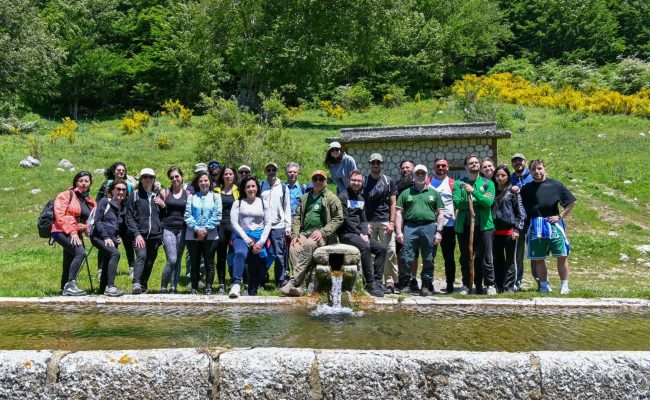
Dal centro storico del paese ai grandi pianori del Partenio, questo itinerario conduce nel cuore della montagna irpina. Il tracciato attraversa boschi freschi, limpide sorgenti e magnifici punti panoramici. Tra i sentieri del Parco del Partenio da Summonte, questo percorso spicca per bellezza e ricchezza naturalistica. Salendo di quota, il paesaggio cambia gradualmente. Le ampie […]

The traditional Mirabella Eclano Cart Pull takes place every year in honor of Our Lady of Sorrows and is one of the most popular in Southern Italy.

The Church of San Rocco in Quaglietta, in the province of Avellino, restored in 2016, boasts an ancient history and uncertain origins.

Every April 28th in Castelvetere sul Calore, the centuries-old tradition honoring Our Lady of Grace is renewed amidst wonder, rituals, and great emotion.

The Good Friday procession in Vallata is one of the oldest Easter celebrations in southern Italy.


