
Cosa fare ad Avellino e dintorni in un giorno
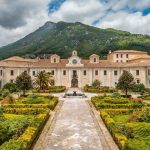
Un giorno per scoprire Avellino e i suoi dintorni! Dal fascino del centro storico ai sapori della cucina irpina, fino ai panorami di Summonte: un itinerario perfetto tra cultura, gastronomia e natura.


Do you remember the tormented history of the village of Carbonara? If you missed it, we invite you to click here to enjoy another equally interesting story, inextricably intertwined with that of the ancient village. The protagonist is the Ethnographic Museum of Aquilonia, which today represents a valuable testimony for the local area and beyond. For the occasion, we spoke again with the current director, Vincenzo Tenore, who guided us through this remarkable institution.
It all began with Professor Beniamino Tartaglia, a central figure in this story. It was 1996, and the demolition of the “seismic houses” was taking place. These were homes where, for decades, a large portion of the population displaced following the 1930 earthquake had lived. The surprising thing was that from their cellars emerged an extraordinary collection of objects from the old Carbonara settlement. And it was Professor Tartaglia himself who initiated the first experimental section. From that moment on, the Museum became a point of reference.
Director Vincenzo Tenore passionately tells us: “The Ethnographic Museum of Aquilonia “Beniamino Tartaglia” is the longest-running private museum in Irpinia, one of the most important demo-ethno-anthropological museums in Italy. It is located in the new town but also has an annex in the abandoned village of Carbonara. It has a collection of 13,000 objects displayed in 90 thematic settings organized over an area of approximately 1,500 m² inside and 600 m² of outdoor exhibition on agricultural mechanization. The latter is a moving testimony to the life and values of the place and the entire Southern Apennines. It has a beautiful library. custodian of approximately 11,000 digitally catalogued volumes, and a research center for numerous scholars and academics.” These figures demonstrate the value of an immense and precious historical and cultural heritage.
We also asked the director about the activities he carries out at his museum: “There are many initiatives, one of which, for example, is organizing book presentations and publications. Today, the museum even has its own publishing house! Edizioni MEdA, which continues the scientific and historical research begun with Professor Mimì Tartaglia, providing space for researchers, scholars, and theorists in the field to produce cultural content.” Furthermore, Vincenzo enthusiastically adds: “There is a strong focus on younger people, through guided tours and numerous workshops. The goal is to raise awareness of the traditions linked to rural life and promote the most active participation possible.” And again: “Another of the museum’s goals is to historicize the visit, immersing you in the past. The museum, by virtue of this, offers a virtual tour. Starting from the website, you can wander through its spaces, selecting the object of interest with a simple click and receiving a brief description.” A truly unique experience, which we invite you to try. Finally, he concludes: “The museum is committed to carrying forward the founders’ intention, which is to take care of the village.”
But that’s not all; the museum also has many future goals, continues Vincenzo Tenore: “Starting with significant functional transformations, also thanks to the financial support of the Province, which aim to improve accessibility, both material and immaterial, enhance the museum’s content, and expand the library spaces themselves.” There’s also an interesting preview: “The museum has begun the process of joining the national music system and also intends to establish cultural partnerships with Campania and national universities.” In conclusion, there’s no longer any doubt: the museum confirms its position as one of the most important in the country and stands as an example of true civil resistance and an act of profound respect for the community and the territory.
So, is it worth a visit? We certainly believe so, for a truly one-of-a-kind experience. A word of advice: to get the most out of your visit, we recommend booking your visit before you leave. You can do so through the museum’s beautiful website, which includes all the necessary email and phone numbers and a dedicated online booking form. You’ll also receive valuable on-site support, with the option of a guide to ensure your visit is perfect, leaving you with wonderful memories. We look forward to seeing you at the Ethnographic Museum of Aquilonia!
Sources:
Meda Museum – Ethnographic Museum of Aquilonia – Beniamino Tartaglia
Make
Money

Un giorno per scoprire Avellino e i suoi dintorni! Dal fascino del centro storico ai sapori della cucina irpina, fino ai panorami di Summonte: un itinerario perfetto tra cultura, gastronomia e natura.

Alle porte di Avellino sopravvivono i resti di Abellinum, l’antica città romana sorta sul pianoro della Civita. Un viaggio ad Atripalda tra mura, strade e una grande domus che raccontano oltre duemila anni di storia.

Gesualdo Castle in Irpinia. Its thousand-year history, its legend, and the figure of the renowned composer Carlo Gesualdo.

Aterrana e il Museo di Papaciccio raccontano la storia rurale di Montoro attraverso antichi mestieri, oggetti quotidiani e un’esperienza dal ritmo lento.

The Borgo Castello di Calitri, in the province of Avellino, has survived centuries of wars and earthquakes until it became the current Ceramics Museum.

The origins and history of the Irpinian dialects, a complex dialect used in Irpinia in the province of Avellino.

The Ethnographic Museum of Aquilonia allows you to lose yourself in time, offering a window onto the past but also, and above all, onto the future.

The Zeza is an ancient tradition that harks back to Latin comedy and the masked theatre of the regional Commedia dell’Arte.


