The Picentini Mountains Regional Park
The Monti Picentini Regional Park is an embrace of wild nature and ancient serenity, where the soul is lost among the peaks and the heart finds refuge.


The Piana del Dragone is located in the municipality of Volturara Irpina, in a natural basin of the Monti Picentini. It is a stunning place, completely immersed in greenery, which enchants visitors every year with its extraordinary transformation: from a boundless expanse of green in summer to the so-called Lago Dragone in winter. Of great interest is the nature walk along the path from the Bocca del Dragone to the lock near the lake, which prevents the raging waters from flooding the entire town.
The Piana del Dragone extends over a flat area of approximately 1,100 hectares, located at an altitude of 685 meters above sea level. It is the most important hydrogeological basin in Campania, as it supplies the springs that bring water to the regions of Puglia and Campania. Furthermore, being entirely surrounded by the mountains that border it, including Mount Terminio, it can be considered a true natural amphitheater.
Given the presence of limited sandy alluvial deposits and large quantities of earthy mud, it is assumed that the plain is of karst origin.
In the past, rainwater and snow flowing from the Terminio Massif towards the plain flooded the entire town of Volturara. Following the earthquake that shook the slopes of Mount Costa, a natural chasm called Bocca del Dragone opened up, which acts as a natural sinkhole for stagnant water in the plain. Following this phenomenon, in the winter, rainwater tends to collect in the lowest part of the plain, forming a natural basin called Dragon Lake.
According to an ancient legend, the Dragon Plain took its name because, near the three-arched underground sinkhole, known precisely as the Dragon’s Mouth, lived a three-headed dragon that terrorized the villagers. The three cavities arose precisely after the creature settled in that precise location. A brave knight named Gesio, determined to free the inhabitants of Volturara from terror, descended armed with a sword into the caves occupied by the dragon, managing to slay it. It is said that when the water rushes into the Dragon’s Mouth, it recalls the sound of the blood flowing from the dragon killed by Gesio.
The Dragon’s Plain is a place to experience and appreciate all year round. In summer, thanks to the presence of rides and a picnic area, it is perfect for an outing with family or friends. It is equally spectacular in winter when the landscape changes completely and the entire green meadow, on which in the summer months people play football or lie down to sunbathe, becomes the lake bed, surrounded by deep, soft snow.
Thanks to the important regulating function of the forest, small springs and sources of fresh, perennial water abound, among which the most important are: Acque delle Logge, which flows at an altitude of 1,260 m above sea level, Acqua degli Uccelli, and Acqua del Cerchio.
The waters coming from the mountain tops disappear into ravines known as Ventare before reaching the valley, which feed the Acqua springs. Mieroli, Aunt Maria’s Water, Walnut Water and Serra. It is precisely in the Serra areas that we find the most abundant hydrophilic zones.
With this blog, we hope we’ve convinced you to visit Volturara Irpina and the Piana del Dragone, a magical place where you can admire with incredulous eyes how nature can amaze in all its forms.
In addition to representing a fundamental ecosystem for hydrogeological balance, the Piana del Dragone boasts a rich biodiversity that makes it a prime destination for lovers of eco-sustainable tourism and birdwatching. The wetlands that form during the winter and spring seasons become a vital habitat and temporary refuge for numerous species of migratory birds. But the extraordinary connection between this area and nature is also expressed through its gastronomic excellence: it is precisely in the fertile volcanic soils of this valley that the renowned Quarantino Bean of Volturara Irpina is grown. Recognized as a Slow Food Presidium, this legume with ancient origins grows thanks to the unique microclimate of the plain, becoming the undisputed protagonist of traditional local recipes and attracting more and more food and wine enthusiasts every year in search of authentic flavors.

The Monti Picentini Regional Park is an embrace of wild nature and ancient serenity, where the soul is lost among the peaks and the heart finds refuge.
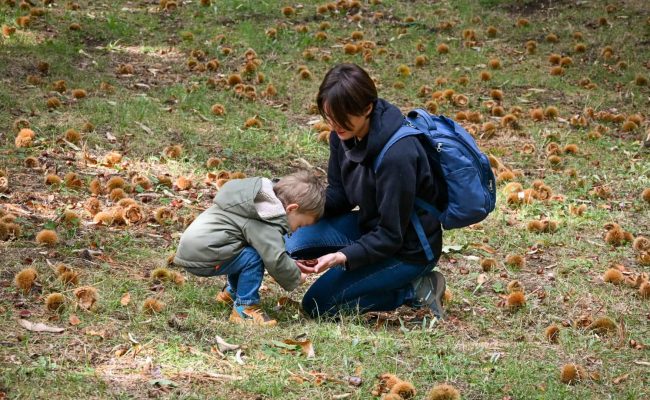
A Montella l’autunno si riconosce da un gesto molto semplice. Le persone si chinano tra le foglie secche e raccolgono i frutti appena caduti. Tra ottobre e i primi giorni di novembre, i boschi diventano i luoghi più vivi dell’intero territorio. La raccolta autunnale coinvolge attivamente produttori, intere famiglie e numerosi visitatori. Questo periodo non […]

Un bambino che cammina in un bosco non fa semplicemente una passeggiata. Osserva, esplora, tocca, ascolta e fa continue domande. Impara a conoscere l’ambiente circostante attraverso l’esperienza diretta. Il contatto con la natura stimola la curiosità e sviluppa l’autonomia. Aiuta i più piccoli a maturare una maggiore e profonda consapevolezza dell’ambiente. Questo è uno dei […]

The Cairano Cliff, in the province of Avellino, can be reached by climbing the village streets. It offers a spectacular view and gives the wind a sweet and unique melody.
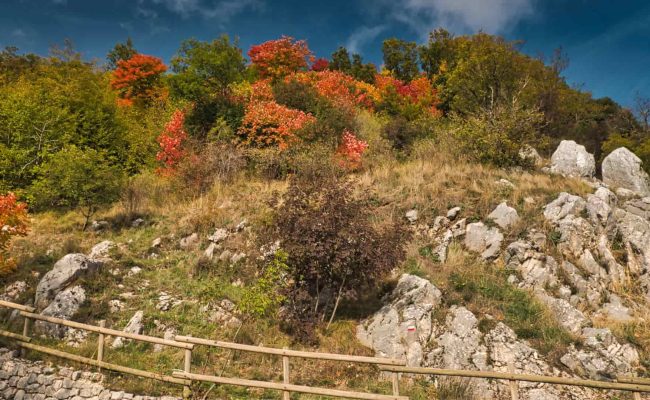
Seguire idealmente le tracce del lupo significa immergersi nei paesaggi più autentici del Parco del Partenio. Tra faggete, crinali panoramici e fauna selvatica, ogni passo diventa un incontro con la natura.

Excursions between Mount Terminio and the Sabato River: path 131 which, crossing the Campolaspierto plateau, leads to the Ripa della Falconara and path 129.

Surrounded by the Picentini Mountains, Lake Laceno is a popular destination for both summer and winter tourism, as well as a host of recreational activities.
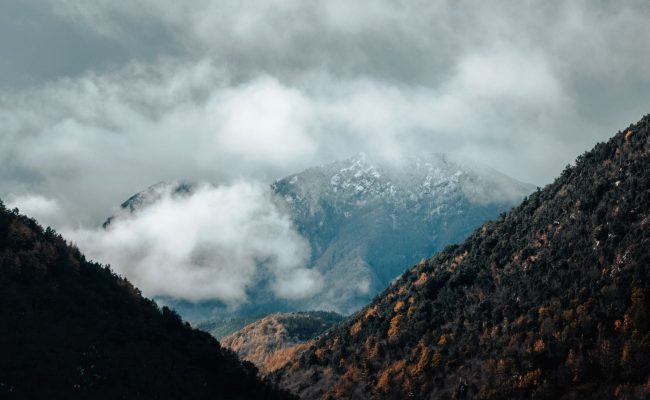
Il Monte Accellica, conosciuto come la Regina dei Picentini, offre percorsi di trekking tra boschi, sorgenti e creste rocciose. Scopri gli itinerari più impegnativi per raggiungere le sue vette e ammirare panorami spettacolari sull’Appennino campano.


