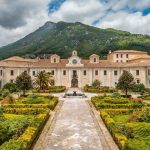
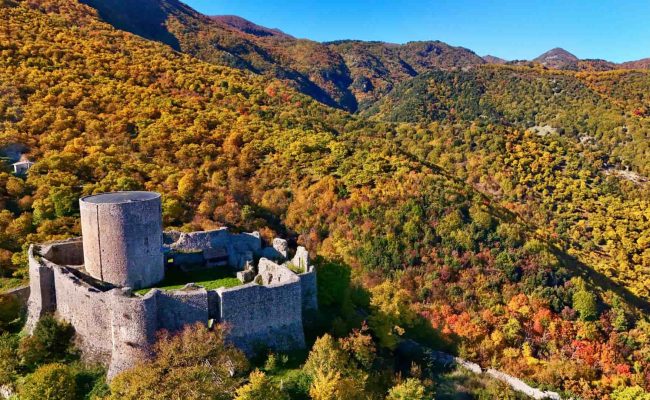
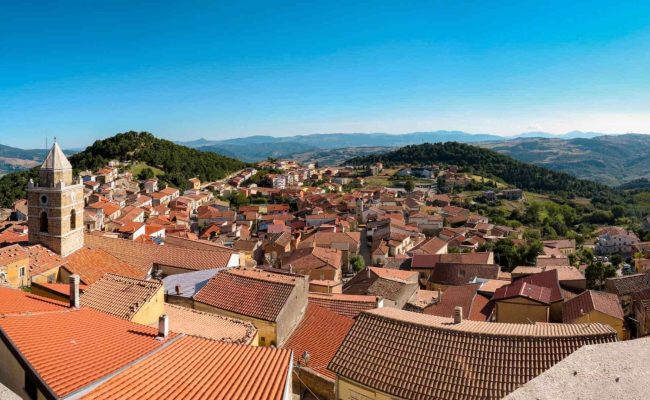
In the heart of the Campanian Apennines, where the provinces of Avellino and Salerno meet, lies a treasure of inestimable value: the Picentini Mountains Regional Park, a protected natural area established by the Campania Region in 1995. The organization is headquartered in Irpinia, in Nusco, in the charming sixteenth-century Palazzo della Famiglia Astrominica. The 30 municipalities that are part of it – all in the Avellino and Salerno areas – are: Acerno, Bagnoli Irpino, Calabritto, Calvanico, Campagna, Caposele, Castelvetere sul Calore, Castiglione dei Genovesi, Chiusano di San Domenico, Eboli, Fisciano, Giffoni Sei Casali, Giffoni Valle Piana, Lioni, Montecorvino Rovella, Montella, Montemarano, Montoro, Nusco, Olevano sul Tusciano, Oliveto Citra, San Cipriano Picentino, San Mango Piemonte, Santa Lucia di Serino, Santo Stefano del Sole, Senerchia, Serino, Solofra, Sorbo Serpico, Volturara Irpina.
Geomorphological Characteristics
Extending over an area of approximately 63,000 hectares—and creating a unique setting for the region and the entire South—the Park unfolds between the Calore, Sabato, Sele, Ofanto, and Picentino rivers, the first four of which are also the main rivers for the province of Irpinia.
The geomorphological characteristics of the Picentini Mountains are extremely heterogeneous and interesting: in fact, we have gentle slopes and gradual valleys in the piedmont area, while rocky and rugged ridges in the other macro-area, the mountainous one.
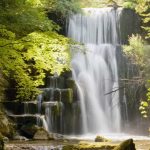
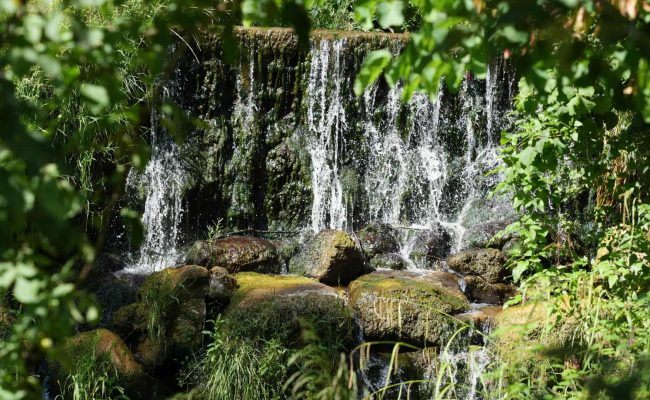
The highest peaks are: Monte Cervialto (1,810 m. above sea level), Terminio (1,806 m. above sea level), Polveracchio (1,790 m. above sea level) and Accellica (1,660 m. above sea level). The park also includes, for the province of Avellino, gems such as the Natural Oasis “Valle della Caccia” of Senerchia – a dive into uncontaminated nature among waterfalls and black pines – and the Laceno Plateau, a place of naturalistic interest near Bagnoli Irpino, without forgetting suggestive valleys and plains.
In this corner of Southern Italy, the abundance of springs and the abundance of underground water resources constitute a precious asset not only for the Avellino and Salerno areas, but also for the Naples area, for Sannio and for nearby Puglia, all areas that benefit from it for drinking water, agricultural and industrial purposes. For example, we can recall the springs of Serino, the extraordinarily clear ones of Cassano Irpino, or, of course, those of the Sele. The woods – immense green structures teeming with chestnut trees, beech trees, conifers, and other tree species – gently envelop the mountain slopes, also offering refuge to numerous animal species, among which wild boars, roe deer, foxes, golden eagles, and, of course, wolves.
Curiosities
We have also mentioned the importance of valleys and plains within the Picentini Mountains Park: in particular, you will know the Piana del Dragone? It is a natural basin located in the territory of Volturara Irpina, which every year enchants countless visitors with its extraordinary metamorphosis from an immense expanse of green (in the summer months) to a fascinating lake (in the winter months).
The area in question also has an aura of mystery and legend, given that various seismic phenomena – according to tradition, especially the earthquake of 1456 – have created a chasm called Mouth of the Dragon. According to legend, a three-headed dragon lived there that terrorized the inhabitants of the village and was killed by the knight Gesio. It is, moreover, a popular saying that the water flowing into the Dragon’s Mouth sounds like the sound of dragon’s blood.
Activities in the Park
The Monti Picentini Regional Park offers a wide range of activities for visitors, allowing them to fully enjoy the natural beauty of this area. The package ranges from guided tours to trekking—immersing themselves in breathtaking views—to experiences dedicated to cycling, where the Park offers roads and trails tailored for mountain biking.
Equally evocative are the experiences related to birdwatching (for ornithology enthusiasts) or horseback riding. Likewise, it is worth mentioning the possibility of organizing picnics in complete safety and complete relaxation in nature. As well as the opportunity to enjoy go-kart tracks for high-speed racing enthusiasts.
A wellspring of culture and biodiversity
The value of the Picentini Mountains is not limited to their extraordinary natural beauty, because the mountains are also custodians of a thousand-year history, with exceptional architectural and cultural heritage.
More specifically, traces of the past are revealed through ancient villages, imposing castles, churches, and archaeological sites that tell stories of past civilizations and deep-rooted traditions. Among them: the village of Quaglietta (Calabritto), that of Senerchia (currently under construction) and the Convent of San Francesco a Folloni (Montella).
In addition, it is crucial to remember that the territories in question, in addition to featuring woods and basins of obvious intrinsic value – and in addition to boasting, as mentioned, architectural and cultural gems – offer extraordinary potential for the production of bioenergy on a large scale, being areas that clearly wink at renewable energy sources, by virtue of a natural capital on average higher and more intact.
This, on the other hand, takes on immense importance in an era in which it is extraordinarily necessary and urgent to break away from fossil fuels, placing the focus on production from renewable sources and, in general, that biodiversity that is at home in these areas.
Territorial economy
Coming to the economic side, in the Park territory – however today also populated by significant industrial activities – it is definitely agriculture that makes its voice heard, rising to the forefront of the local economy.
Within this, the role of the renowned chestnuts of Serino and Montella stands out, as does that of the Bagnoli Irpino truffle, a product of excellence successfully exported worldwide.
Furthermore, by laying the foundations for a sustainable economy, the Park also promotes environmental education and sustainability activities, organizing workshops and events to raise public awareness of the importance of conserving its finite natural resources.
Ultimately, exploring the Picentini Mountains Park is a head-on encounter with the pristine beauty of nature, which in turn blends with the historical and cultural richness of the area, offering visitors an exciting experience.
Ph: Andrea Tavolozza