
La Cicerchia di Frigento un patrimonio da scoprire
Antico legume della tradizione contadina, la Cicerchia di Frigento racconta la biodiversità, i sapori e l’identità di un territorio che guarda al futuro.


At the foot of Mount Terminio, in Volturara Irpina to be precise, the Quarantino bean is grown. This small, tender, and floury white legume, characterized by a thin skin, is a true ancient delicacy, so called because it takes 40 days to fully ripen. The seed is of local origin, reproduced and preserved by Volturara farmers.
Curiosities: the Slow Food Presidium
Did you know thatsince 4 August 2018 Fagiolo Quarantino has become part of Slow Food Presidium? This is a very important recognition, useful not only for relaunching this bean variety, but also for affirming an ancient tradition that makes this area and its community unique.
Maria Petretta, shareholder of the Società Agricola Castagne Petretta and president of the Volturara Irpina Bean Association, also confirms this. “The importance of the bean had not been fully understood before the Presidium recognition,” she told us, “also because there was a tendency to focus more sporadically on this local excellence.”
2018, therefore, truly marked a “before” and “after,” also paving the way for the creation of a network of companies that grow, and now export, this product everywhere.
Harvest and dedication
Sowing begins in May and is harvested between late August and early September. The Volturara Irpina Quarantino bean plant is grown without stakes or supports. The local climate – foggy and humid – creates, together with the soil, the ideal conditions for growing this special legume, in a context where cultivation is strictly manual and, above all, laborious.
For the people of Volturara, the hand-harvesting of the Quarantino bean is considered sacred, a task carried out with such passion and dedication that it truly seems as if they are extracting huge quantities of gold from mine veins.
The harvest is also, ultimately, a moment that creates unity; In fact, it involves many people from the village who—sometimes without even knowing each other—come together and share beautiful and intense moments dedicated to this symbolic fruit of the earth.
Once the pods are harvested—about 15 cm long and containing about 10 beans each—they are beaten with a stick to release the beans. After beating, the beans are sorted using a sieve with movements that allow the beans to be thrown into the air. The action of the wind eliminates the lightest residues, before the beans are left to dry for about 3 days.
What recipes showcase the Fagiolo Quarantino? What benefits does it have?
The Quarantino bean from Volturara Irpina is an important ingredient in numerous soups and stews. According to typical Irpinia recipes, we can mention: fasùli and ditalini, laane and fasùli, pasta and fasùli, zuppa rè fasùli or scazzuoppoli (fried dough balls), not to mention bean and potato or bean and chestnut soups.
The Quarantino bean is also tasty when served alone, for example boiled with extra virgin olive oil and aromatic herbs. It is also very rich in minerals, vegetable proteins, and vitamin B12, and is an excellent ally against cholesterol. Likewise, it should not be forgotten that the thin skin of this white bean variety makes it highly digestible.
The Quarantino Bean Festival
The festival typically dedicated to the Quarantino Bean – which this year reaches its tenth edition – was conceived way back in 2010, but was finally held a year later, during a period of severe crisis for the small Irpinia town and for Italy as a whole.
The crisis at the time also affected chestnuts, a traditional local product, so it was decided to focus more heavily on the Quarantino Bean.
Beyond the gastronomic significance itself, the festival has a strong symbolic value, with a clear connection to culture, history, traditions, and roots. In this context, it is envisioned as a free mass at the center of the Volturara and Irpinia identities.
This idea, emphasizes Marino Sarno of the Fagiolo di Volturara Irpina association, is embodied by the opportunity to participate in excursions and guided tours during the festival at the Piana del Dragone ethnographic museum, as well as at the Bocca del Dragone. For the more athletic, there are spectacular via ferratas and climbing routes, as well as the Hannibal Trail.
The 2022 Festival Program
Friday, October 14: Evening food stands and musical entertainment with PopolAnima and Ambaradam, not to mention the Boomerang Street Band.
Saturday, October 15: During the morning: excursions, guided tours by reservation to the Piana del Dragone ethnographic museum and the Bocca del Dragone. In the evening: entertainment with Silvano Santacroce, Eugenio Corsi, Le Ninfe della Tammorra, DJ Rob del Percio, and DJ Raf Colucci. The aforementioned Boomerang Street Band will also be present on Saturday evening.
Sunday, October 16: Morning: Via ferratas and climbing routes. After lunch in the square, you can take part in a hike along the Hannibal Trail. In the evening: Slow Food Avellino APS Taste Workshop on the Quarantino Bean and musical entertainment with: Come nelle favole, Enzo Costanza, Compagnia daltrocanto, The New Band, and street artists.
Don’t miss a renowned event in our province, revived this year with renewed enthusiasm after the pandemic shutdown. Come and experience this unforgettable experience of taste, roots, dedication, and culture!
Photo courtesy of Paola Mignone of the “L’orto di Paola” farm
[/et_pb_text][/et_pb_column][/et_pb_row][/et_pb_section]

Antico legume della tradizione contadina, la Cicerchia di Frigento racconta la biodiversità, i sapori e l’identità di un territorio che guarda al futuro.

Cosa sarebbe una sagra irpina senza il profumo del caciocavallo impiccato? Una tradizione che unisce gusto, convivialità e cultura gastronomica, trasformando una semplice fetta di pane in un’esperienza irresistibile.

History and production of Taurasi DOCG wine, obtained primarily from Aglianico grapes and a perfect example of Irpinia excellence.
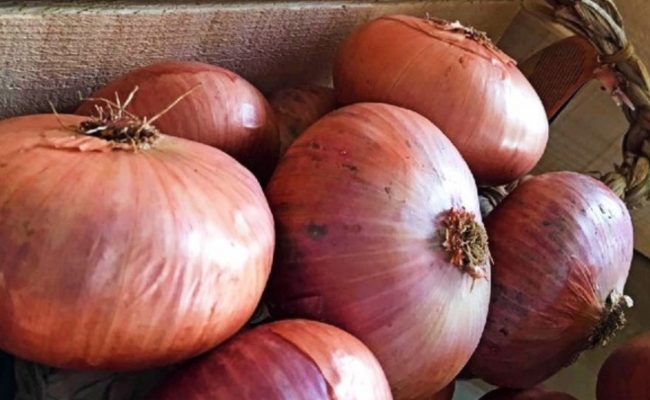
Dolce, delicata e dal caratteristico colore ramato: la cipolla di Montoro è uno dei tesori della gastronomia irpina. Scopri la sua storia, le tradizioni contadine e le ricette che l’hanno resa protagonista anche della cucina d’autore.

From the legendary emerald drop to the legendary secret recipe passed down from generation to generation, the story of Anthemis is waiting to be savored.

Eternal like its history, authentic like its flavor, Greco di Tufo DOCG is a fine, harmonious, and fresh wine with a strong propensity for aging.

Mugnano del Cardinale salami, whose production process is characterised by the wind, is now included among the PAT products of the Campania Region.

Profumato, prezioso e profondamente legato al territorio, il Tartufo Nero di Bagnoli Irpino è una delle eccellenze più rappresentative dei boschi irpini.


