Castelvetere sul Calore: tra castello, vicoli e storia millenaria
La Ripa, antico nucleo di Castelvetere sul Calore, conserva intatto il fascino medievale del borgo nato intorno a un castello longobardo.


Alta Irpinia is a land that has produced extraordinary figures. Saints, female leaders, intellectuals, and statesmen have left deep traces here that still tell a story of faith, culture, and vision.
A unique route unfolds between Sant’Angelo dei Lombardi and Morra De Sanctis, spanning nearly a thousand years of history and offering the chance to discover three figures who helped make this land great: Saint William of Vercelli, Abbess Marina II, and Francesco De Sanctis.
In the 12th century, a pilgrim from Piedmont arrived in these mountains and was captivated by them. It was Saint William of Vercelli, the founder of Montevergine and now the patron saint of Irpinia.
It was he who founded the Abbey of Goleto in 1133, destined to become one of the most important spiritual centers of the medieval Mezzogiorno.
The complex was built on the remains of an ancient Roman site and was conceived as an innovative double monastery, where communities of men and women lived side by side. It was a state-of-the-art structure for its time, attracting pilgrims, members of the clergy, and the faithful from across Southern Italy.
To this day, Goleto retains that atmosphere of contemplative stillness that led William to choose this place as the center of his spiritual journey.
If Saint William was the founder, Marina II was the woman who contributed most significantly to the development and magnificence of the abbey.
A cultured, authoritative, and visionary abbess, she governed the monastery during one of the periods of its greatest splendor. She was responsible for the construction of the Chapel of Saint Luke, one of the monastic complex’s most precious architectural gems.
Her figure bears witness to the extraordinary role that some women managed to secure in the Middle Ages, exercising religious, administrative, and cultural functions of great importance.
Strolling today among the Febronia Tower, the Chapel of Saint Luke, and the monastery grounds, one can still sense the legacy left by this exceptional abbess.
A few kilometers further on, the journey leads to Morra De Sanctis, the village that gave birth to one of the most important figures in Italian culture and politics.
Born in 1817, Francesco De Sanctis is considered the father of modern Italian literary criticism. However, to reduce him to a mere scholar would be limiting. He was a teacher, philosopher, patriot, politician, and a key figure of the Italian Risorgimento.
His life was deeply intertwined with the events that led to the unification of Italy. Due to his liberal views, he was arrested by the Bourbons and spent several years imprisoned at Castel dell’Ovo in Naples. It was during his captivity that he continued his studies and personal development, transforming one of the most trying ordeals of his life into an opportunity for intellectual growth.
After the unification of Italy, he was appointed to one of the new state’s most important posts: Minister of Public Education. His goal was as ambitious as it was revolutionary: to use the school system to forge a shared national consciousness in a country that had just been unified yet remained deeply divided.
His most famous work, the *History of Italian Literature*, remains a cornerstone of Italian culture to this day. For the first time, literature was not presented merely as a succession of authors and works, but as an expression of the life, society, and soul of a people. It was an innovative vision that influenced generations of scholars and continues to be studied in universities.
To this day, Morra De Sanctis preserves many traces of its connection to the great intellectual. Dominated by the Biondi-Morra Castle, the village is home to the De Sanctis Memorial Museum, historical documents, sites from his childhood, and vistas that helped shape his thought.
It is not difficult to picture the young Francesco gazing out over these valleys of Alta Irpinia, drawing inspiration from a land he would always carry with him—even during the most significant moments of his political and cultural career.
Walking through the narrow streets of Morra today means stepping into the places that witnessed the birth of one of the men who contributed most significantly to the cultural shaping of modern Italy. Here, the landscape is not merely a backdrop; it is an integral part of the story of a man who, starting from a small village in Irpinia, managed to leave an indelible mark on the nation’s history.
Amidst the ancient stones of Goleto and the narrow streets of Morra De Sanctis, Alta Irpinia tells the story of men and women who—through faith, culture, and thought—have left a profound mark far beyond the borders of this land.

La Ripa, antico nucleo di Castelvetere sul Calore, conserva intatto il fascino medievale del borgo nato intorno a un castello longobardo.
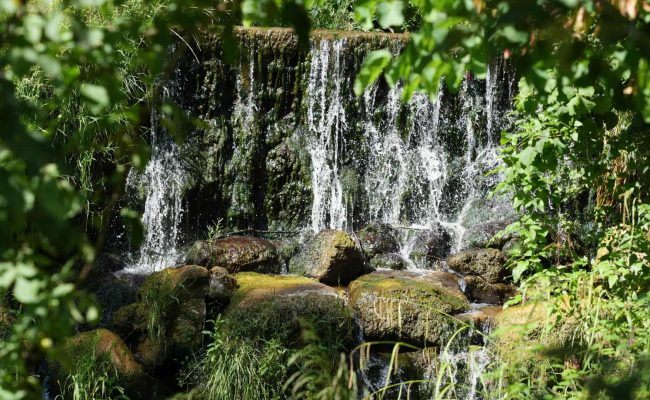
L’acqua destinata alla Puglia comincia il suo lungo viaggio tra le verdi montagne dell’Irpinia. A Caposele, presso le abbondanti sorgenti della Madonna della Sanità, prende avvio il monumentale Acquedotto Pugliese. Da qui parte idealmente anche una ciclovia tra le più particolari dell’intero Sud Italia. Questo percorso unico segue fedelmente le strade di servizio della storica […]

Dalle mura del Castello Guevara ai boschi della Valle del Cervaro, Savignano Irpino racconta il legame tra storia e natura
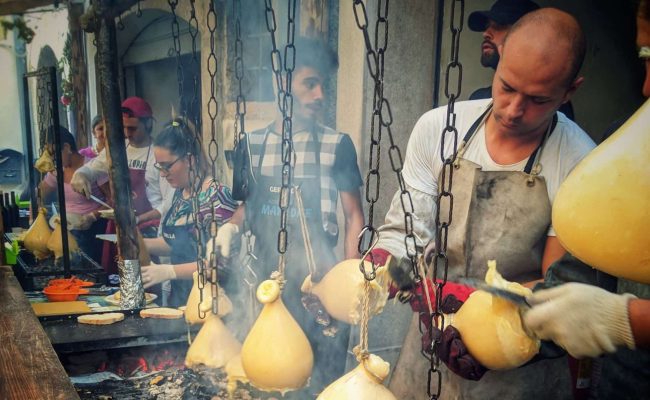
Immagina di passeggiare tra i vicoli di un borgo irpino, seguendo il profumo della brace e delle caldarroste. Tra panini, formaggi, pasta fatta in casa e dolci tradizionali, scopri gli assaggi imperdibili delle sagre in provincia di Avellino.

Un giorno per scoprire Avellino e i suoi dintorni! Dal fascino del centro storico ai sapori della cucina irpina, fino ai panorami di Summonte: un itinerario perfetto tra cultura, gastronomia e natura.

In Irpinia, one of the most beautiful villages in Italy: a small medieval jewel known for its castle, stone alleys, and Byzantine caves.

Dalle prime tracce della presenza umana alle straordinarie Cisterne Romane, Frigento custodisce un patrimonio che attraversa migliaia di anni di storia.
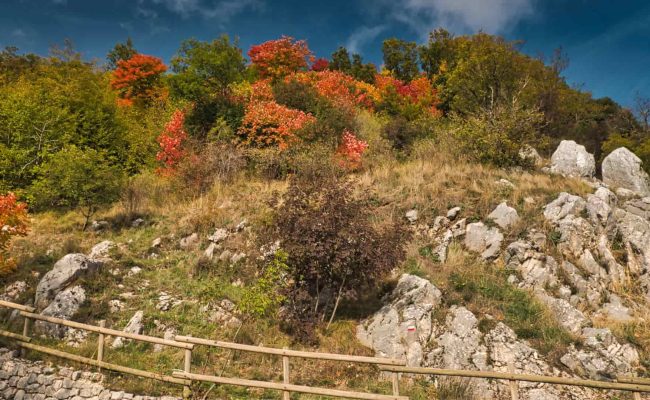
Seguire idealmente le tracce del lupo significa immergersi nei paesaggi più autentici del Parco del Partenio. Tra faggete, crinali panoramici e fauna selvatica, ogni passo diventa un incontro con la natura.


