In Gesualdo, music still seems to emanate from the stones of the castle, wafting through the medieval alleys and echoing across the hills of Alta Irpinia. Listed among the most beautiful villages in Italy, this charming town dominates the Calore Valley with its skyline of towers, stone alleys, ancient buildings, and sweeping views. But what makes this place truly unique is the intense and tormented history of its most famous lord: Carlo Gesualdo.
Carlo Gesualdo, between musical genius and torment
Prince of Venosa, revolutionary composer, and one of the most controversial figures of the Italian Renaissance, Carlo Gesualdo is considered one of the fathers of modern polyphonic music. His compositions, incredibly innovative for their time, are still studied today in conservatories around the world for their extraordinary harmonic modernity.
But his name is also linked to one of the most famous crimes in Italian history. In 1590, Carlo Gesualdo murdered his wife Maria d’Avalos and her lover Fabrizio Carafa after discovering them together in their palace in Naples. An episode that shocked the nobility of the time and transformed the prince into a figure suspended between artistic genius, inner torment, and legend.
After the crime, Gesualdo retired to the family castle in Irpinia, living years marked by spirituality, music, and a profound sense of guilt. According to many historians, it was precisely in an attempt to seek redemption that he commissioned the famous Pala del Perdono, now housed in the Convent of the Capuchin Friars in the village.
Created in 1609 by the Tuscan painter Giovanni Balducci, an artist close to the Counter-Reformation, the work depicts a complex religious scene dominated by the theme of the salvation of the soul. At the top, Christ the Judge and the Madonna intercede among saints and angels, while in the lower section, Carlo Gesualdo appears kneeling with his family, as if imploring divine forgiveness. Among the figures depicted are Saint Charles Borromeo, the prince’s uncle, and Mary Magdalene, a universal symbol of penance and redemption.
Gesualdo Castle and the charm of the medieval village
Overlooking the town from above, Gesualdo Castle still represents the symbolic heart of the village. Its origins likely date back to the Lombard era, but over the centuries it was transformed into a refined noble residence.
Walking through the courtyards, ramparts, and ancient halls immerses you in an atmosphere suspended between history, music, and charm. Even today, in some rooms of the castle, it is possible to hear the madrigals composed by Carlo Gesualdo within these very walls, creating a unique experience where architecture and music seem to merge.
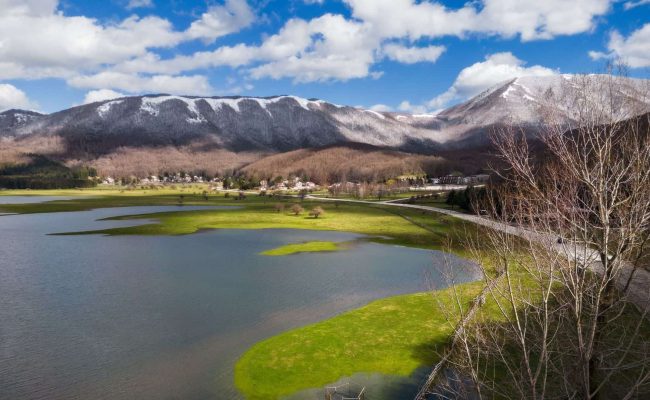
From here, the view of the Calore Valley is extraordinary: hills, vineyards, and woods accompany the gaze in one of the most fascinating landscapes of Alta Irpinia.
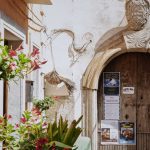
The historic center retains a discreet and authentic elegance. Stone alleys, intimate squares, ancient buildings, and panoramic views still tell the story of the town’s aristocratic past. Walking between Palazzo Pisapia, Palazzo Mattioli, and the narrow streets of the village, you can clearly sense the profound connection between Gesualdo, music, spirituality, and historical memory.
The Flight of the Angel and Popular Traditions
Gesualdo also preserves popular traditions deeply felt by the community. Among these, the evocative Flight of the Angel stands out, an ancient performance held every year during the celebrations dedicated to Saint Vincent Ferrer, the town’s patron saint, celebrated on the last Sunday of August.
On this occasion, a child dressed as an angel crosses Piazza Neviera suspended on a rope that connects a castle tower to the bell tower of the Church of the Holy Rosary. The devil instead appears from the center of the square, giving rise to a heated and often ironic dialogue between good and evil that also recounts episodes and events experienced by the community throughout the year.
The performance always concludes with the devil’s retreat and the angel’s final blessing on the population through the intercession of Saint Vincent Ferrer. A collective ritual that for generations has united faith, popular theater, and local identity.
Experience Gesualdo with Info Irpinia
With Info Irpinia, you’ll discover Gesualdo through a journey of music, history, art, and mystery. We’ll accompany you through the medieval alleys, Carlo Gesualdo’s castle, the works housed in the village, and the stories that have made this place famous throughout the world.
An immersive experience among madrigals, castles, popular traditions, and timeless atmospheres in the heart of Alta Irpinia.
If you want to discover the most fascinating and mysterious side of Gesualdo, contact us and let us guide you through one of the most surprising villages in Campania.