
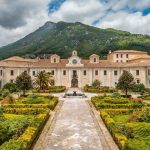
Mugnano del Cardinale e il Santuario di Santa Filomena
Da oltre due secoli il Santuario di Santa Filomena richiama pellegrini da tutto il mondo, custodendo uno dei luoghi di fede più importanti dell’Irpinia.


In the heart of Alta Irpinia, at 665 meters above sea level and a few kilometers from the border with Basilicata, Sant’Andrea di Conza dominates the Ofanto Valley with the discretion of villages that don’t need to amaze to leave their mark. Its medieval origins, its prestigious past as a bishopric, its monumental buildings, its ancient gastronomic traditions, and its vibrant cultural activity speak of a community that has successfully preserved its identity, transforming it into a resource for the present.
Walking through its streets means taking a journey through almost a thousand years of history, from the first medieval documents to the great cultural events of today, without ever losing that authentic connection with its roots that characterizes many villages in Irpinia.
The first documentary evidence of Sant’Andrea di Conza dates back to 1161, when the town is mentioned as a castle belonging to the nobleman Gionata di Balvano. Founded as a hamlet of Conza on the right slope of the Ofanto Valley, the village gradually assumed an increasingly important role, becoming part of the Church’s possessions and becoming the seat of the feudal bishops. The symbol of Sant’Andrea di Conza is undoubtedly the Bishop’s Palace, the historic residence of the bishops and one of the most significant monumental complexes in Irpinia. Damaged by the 1980 earthquake and subsequently restored, it now houses the town hall, yet still retains the charm of the ancient episcopal building with its internal courtyard, large green spaces, ornamental fountain, original towers, and evocative cavea theater, which during the summer becomes the heart of the town’s main events.
A few steps away are the ruins of the Convent of Santa Maria della Consolazione, a reminder of the Franciscan presence in the area, while the Metropolitan Seminary leads to the nearby Church of San Michele Arcangelo, also known as the Pro-Cathedral. Inside are an elegant wooden choir and several important paintings by the painter Giovanni Battista Miglionico, testimony to the artistic heritage that the village still preserves today.
The visit continues along a path that also tells the story of work and daily life. The ruins of the ancient water mill, dating back to the eighteenth century, are a reminder of the importance of agricultural activities for the local economy, while the former furnace, now restored and transformed into a multipurpose center, represents one of the most interesting examples of industrial archaeology in Alta Irpinia. Completing this heritage is a Roman stele, discovered in Piano dell’Incoronata and now housed in the municipal offices, which testifies to the fact that these lands were inhabited many centuries before the birth of the medieval village.
Walking through Sant’Andrea di Conza therefore means traversing different eras, where religious buildings, archaeological remains, and memories of productive activities coexist harmoniously within a historic center that has managed to preserve its character.
Alongside its historical heritage, Sant’Andrea di Conza has succeeded in building a strong cultural identity in recent years. This is not a random choice, but the natural evolution of a community that has always recognized knowledge and education as central to its history.
It is in this context that the Book Festival was born, an event that over the years has transformed the village into a meeting place for authors, journalists, scholars, and readers. The squares, courtyards, and monumental spaces become settings for presentations, dialogues, and discussions, making reading an opportunity for collective participation and valorization of the territory.
This path has led Sant’Andrea di Conza to apply for the title of Italian Book Capital 2027, an award promoted by the Ministry of Culture and reserved for municipalities that stand out for their ability to promote reading and the cultural growth of their communities. More than a point of arrival, the nomination represents the recognition of a project built over time, one that looks to the future without forgetting its roots.
The history of Sant’Andrea di Conza is also represented by its recipes, symbols of a heritage of gestures, aromas, and customs passed down from generation to generation, capable of expressing the identity of the area as much as a historic building or a work of art.
Among all of them, one holds a special place: that of calzoncelli, the sweet treat that has been a Christmas staple in the homes of the Upper Ofanto Valley for centuries. Their origins tell a fascinating story. Before the spread of sugar and chocolate, the filling was made with mashed chickpeas, honey, cinnamon, and cloves, ingredients that hark back to ancient Roman confectionery traditions and demonstrate a cuisine that showcased the region’s riches. A simple recipe, born of peasant wisdom, which still retains all the charm of ancient preparations.
Over the centuries, the tradition has evolved without losing its identity. Today, alongside the older recipe, many families prepare a filling based on chickpea or chestnut puree enriched with cocoa, grated dark chocolate, sugar, coffee, and a small glass of Strega liqueur. Cinnamon and cloves, however, remain essential, giving the dessert its unmistakable aroma.
Even the pastry retains the simplicity of tradition: flour, extra virgin olive oil, white wine, a pinch of sugar, salt, and baking soda are kneaded until a thin dough is obtained, then filled, closed like a small ravioli, and fried in hot oil. The final step is what makes calzoncelli instantly recognizable: a generous drizzle of warm honey that envelops them and completes their flavor.
There is no official recipe. Each family jealously guards their own version, passed down from mother to daughter and prepared especially in the days leading up to Christmas. The quantities, some ingredients, or the shape of the dessert may change, but the meaning of this preparation remains unchanged, continuing to bring people together around the same table and transforming the kitchen into the place where family memories take shape.
Calzoncelli are perhaps the most representative recipe of Sant’Andrea di Conza, but they only reveal part of its gastronomic identity. The village retains a strong agricultural vocation, developed over the centuries thanks to the fertility of the countryside of the Upper Ofanto Valley.
Extra virgin olive oil, cereals, vegetables, legumes, wines, and livestock products continue to be the protagonists of a simple cuisine, founded on the quality of raw materials and respect for seasonality. It’s a cuisine that reflects the character of Irpinia: authentic, simple, and deeply rooted in the land.
Here, every dish speaks of the work in the fields, the changing seasons, and the rural knowledge that still represents one of the most precious elements of local culture.
To truly get to know Sant’Andrea di Conza, it’s not enough to stroll among its monuments or savor its specialties: you have to experience the area through the people who preserve its history and traditions. With the experience The pleasure of creating with your hands, Info Irpinia accompanies you on a discovery of this charming village in Alta Irpinia, where culture, craftsmanship, and flavors intertwine in an authentic journey.
An opportunity to visit the town’s iconic sites, meet those who keep ancient knowledge alive every day, and immerse yourself in an experience that reveals the true soul of Sant’Andrea di Conza. Because some places aren’t just visited: they’re discovered, experienced, and taken home with you.

Da oltre due secoli il Santuario di Santa Filomena richiama pellegrini da tutto il mondo, custodendo uno dei luoghi di fede più importanti dell’Irpinia.

Among ancient cave dwellings, religious mysteries, and popular traditions, an authentic journey into the most surprising heart of Alta Irpinia.

Dai campi di Bisaccia ai grani antichi, un viaggio nell’Alta Irpinia dove il grano continua a custodire la memoria, l’identità e il futuro del territorio.
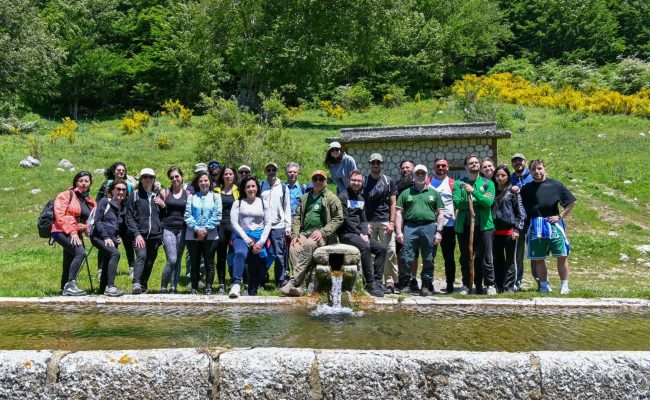
Dal centro storico del paese ai grandi pianori del Partenio, questo itinerario conduce nel cuore della montagna irpina. Il tracciato attraversa boschi freschi, limpide sorgenti e magnifici punti panoramici. Tra i sentieri del Parco del Partenio da Summonte, questo percorso spicca per bellezza e ricchezza naturalistica. Salendo di quota, il paesaggio cambia gradualmente. Le ampie […]

Dalle mura del Castello Guevara ai boschi della Valle del Cervaro, Savignano Irpino racconta il legame tra storia e natura

Cosa vedere a Bagnoli Irpino? Un viaggio tra vicoli antichi, il maestoso Castello Cavaniglia, i capolavori dell’intaglio ligneo e i sentieri immersi nella natura dei Monti Picentini.
A land of history that preserves the ancient Aeclanum, and of peasant traditions such as the historic Pulling of the Cart, erected with woven straw.

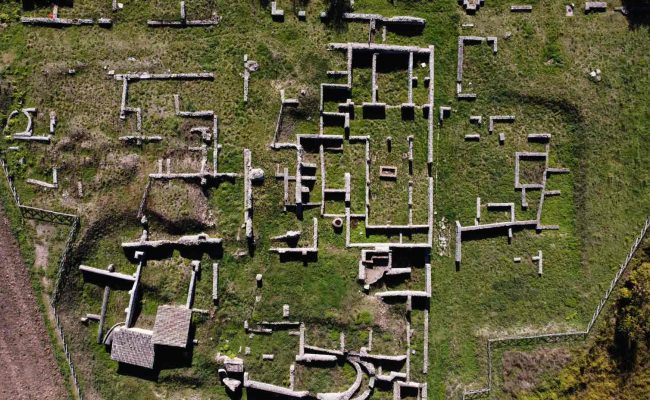
1. A Conza della Campania, le rovine dell’antica città romana convivono con quelle del borgo distrutto dal terremoto del 1980. Scopri il Parco Archeologico di Compsa, un luogo straordinario dove archeologia e memoria si incontrano.


