Montecalvo Irpino: Origin of the Name and History
The municipality of Montecalvo Irpino, in the province of Avellino, boasts a fascinating history that deserves to be discovered since the origin of its name.


Irpinia has always been identified with its hues and shades of green, its mountain landscapes, and the precious traces of an ancient history, present in every corner of a land nourished by toil and imagination and embodied by rural civilization.
The celebration of rurality and the uniqueness of its history are the common thread that binds the entire region. These traits, combined with a tourism that is never mass, make it undoubtedly one of the most sought-after places for those seeking health and tranquility, far from the hustle and bustle of everyday life.
Irpinia is not simply the reproduction of a geographical, historical, and naturalistic space; it is something more and different: it represents, in a new and astonishing way, a reality that has always been before the eyes of its inhabitants and yet seemed to have become almost invisible, elusive, and abstract.
The value of peasant culture, in this area, is what endures the most, and its culture, through notable changes, has survived the ravages of time, nature, and man, and still speaks to us through its numerous testimonies.
An important element of the Irpinia landscape is the rural dwellings, as agriculture and pastoralism have always been the main resources of our land: in their variety of typologies, they bear witness to the stark contrast between the standard of living of the extremely poor peasants and that of the wealthier classes.
The large masserie, variously decorated with loggias and stone friezes, represented the well-being of the “master” who, despite living in a village or city, owned a sumptuous residence on his country estate. The small country buildings, once numerous and built with humble materials, instead reflected the owners’ extreme poverty.
The masserie as a whole represented a collection of rural buildings, intended for different functions, capable of creating autonomous entities for cultivating the fields and raising livestock on large tracts of land, corresponding to large estates.
Although it has now faded, the traditional culture is founded on cohesion and mutual aid. Farmers, small farmers, and artisans are free protagonists of the communities and in decades past lived in solidarity through the exchange of bread and the burial rite, rooted in the land as if they were one with it.
A reality where the rhythm of time is not that of the frenzy of daily life, but that tied to the rhythm of rural tradition. The country folk had preserved ancient ways of keeping track of the passage of time. The cockcrow was the surest clock for indicating dawn, just as the hour of sunset was indicated by the chickens’ retreat into the henhouse.
In the world of agricultural production, there is the intelligence of recovery and the valorization of products, which had previously been partly abandoned; in the world of agriculture, however, there is the economic resource inherited from the past that revalues it through future innovation and creates identity.
Years of history are enclosed in various museums that preserve the memory of the rural world and collect testimonies of a heritage worth knowing and sharing.
Of notable importance are the Ethnographic Museum of Aquilonia and the Museum of Rural and Artisan Civilization of Andretta, composed of numerous rooms that tell the story of ancient crafts and preserve traces of a civilization of ancient rural origins, the reproduction of home and work environments characteristic of the era.
Aimed at rediscovering the customs and traditions of Alta Irpinia, the Museum of Technologies, Culture and Rural Activities of Guardia Lombardi is a great cultural testimony, displaying artifacts, work tools, and an exhibition of artifacts and photographs.
The Ethnographic Museum of the Piana del Dragone in Volturara Irpina is a historical and cultural heritage of rural and artisanal culture.
A precious historical testimony is the Museum of Work in San Potito Ultra, which consists of an anthological collection of objects, the most diverse tools and work instruments of the past. Small but interesting is the Municipal Museum of Villanova del Battista, which houses a gallery of paintings and various sections: materials, modern antiques, and rural culture through history and folklore. The Museum of Rural and Artisanal Activities in Montoro is located in an old rural building.
Irpinia: a land of proud, supportive people, strong people who face challenges in order to overcome them and learn from them.
A microcosm waiting to be discovered, where small communities continue to maintain ties to their own traditions, to those events and roots that strengthen the identity of a people, identifying them and making them unique; because it is from the past that we must begin to understand the present and prepare for the future.
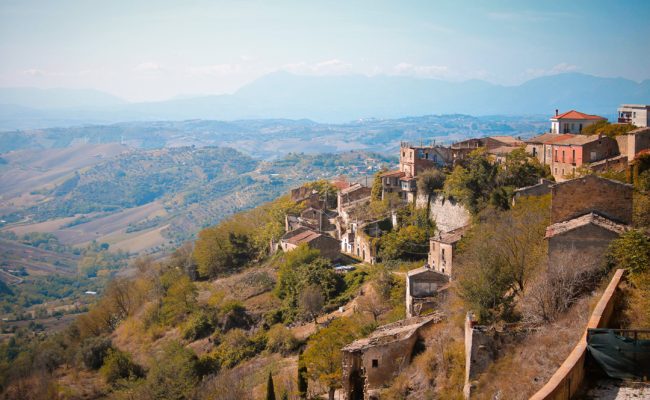
The municipality of Montecalvo Irpino, in the province of Avellino, boasts a fascinating history that deserves to be discovered since the origin of its name.
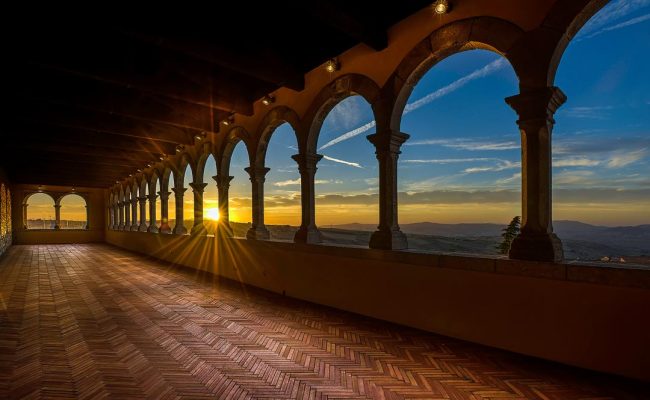
The Ducal Castle of Bisaccia, in the province of Avellino, boasts an ancient history and houses the Bisaccia Civic Archaeological Museum.

Alle pendici del Monte Pizzone, Cervinara occupa un territorio ricco di fascino. La dimensione del borgo incontra quella più ampia della Valle Caudina e del Parco del Partenio. Qui il patrimonio medievale convive con boschi lussureggianti, limpide sorgenti e antichi percorsi. Se ti stai domandando a Cervinara cosa vedere, il borgo offre un itinerario straordinario […]

The Avellino Customs House: a journey from its origins to the present day, through the vicissitudes and restorations of the Palazzo della Dogana

The medieval village of Quaglietta, a hamlet of Calabritto in the province of Avellino, has recently been restored to create a true multi-building hotel.

La Ripa, antico nucleo di Castelvetere sul Calore, conserva intatto il fascino medievale del borgo nato intorno a un castello longobardo.

Cosa lega il comune più alto della Campania alla storia del cinema italiano? Ettore Scola, naturalmente! A Trevico, il ricordo del grande regista prende vita attraverso proiezioni, mostre e iniziative dedicate anche ai giovani talenti.

Lancellotti Castle towers over the plain between Naples and Avellino like an effective compendium of its great past history.


